
Contrary to popular belief, influencer marketing is not a modern byproduct of the digital revolution. Its roots trace back to the 18th century, when Queen Charlotte of Great Britain endorsed Josiah Wedgwood’s pottery and elevated his brand to a symbol of prestige and desirability. By aligning his products with the admired Queen, Wedgwood harnessed the power of influence.
Fast forward three centuries, and although influencer marketing has grown into a multibillion-dollar industry, its foundation remains unchanged. It still relies on leveraging humanity’s desire for authenticity, connection, and a sense of belonging—qualities that will always resonate. The emergence of artificial intelligence (AI), however, threatens to disrupt this delicate balance and potentially make or break influencer marketing.
Brands must rethink how to take advantage of AI’s potential for precision and scalability without compromising the relatability and connection that make influencer marketing effective. Striking a balance between innovation and authenticity requires a clear understanding of AI’s capabilities and the risks it poses. This article outlines those opportunities and challenges, offering recommendations to maximize the benefits, mitigate risks, and sustain effective influencer marketing in an AI-driven world.
AI Opportunities in Influencer Marketing
AI offers influencers tools to expand their reach, streamline processes and workflows, align more effectively with brands, and create content that deeply resonates with their viewers. Here are a few key ways AI can support brands and influencers:
1. Expanded Reach and Scale
AI-powered language translation tools enable influencers to localize their content, helping brands tap into new global markets and connect authentically with diverse audiences. This can make a huge difference for global brands or those trying to grow but struggling to connect with new consumers.
Khaby Lame, the Italian TikTok star known for his silent comedic sketches offering simple solutions to everyday challenges, leverages AI tools to subtitle his videos in multiple languages. This approach transcends language barriers and broadens his global reach while preserving the integrity of his original content, demonstrating how AI can empower influencers to maintain their core message on a worldwide stage.
2. Time Efficiency
AI tools like Descript and Adobe Sensei streamline content creation by effortlessly transforming a single piece of media into multiple formats—such as podcasts, social media posts, and videos—maximizing engagement with minimal effort. This allows influencers to focus on creating compelling products and engaging with their audience, rather than spending time on repetitive tasks like transcribing audio or editing video footage.
Brands can capitalize by partnering with influencers to repurpose content across multiple channels, minimizing production costs while maintaining a consistent, high-quality presence. This strategy helps brands strengthen their audience connection and expand their reach without additional cost.
3. Enhanced Brand Alignment for Greater Impact
A key challenge for brands is identifying influencers who align with their values and resonate with their target audience. AI-powered platforms like Upfluence, Traackr, and BuzzSumo have revolutionized this process by offering tools to filter influencers based on criteria like engagement, demographics, content, and sentiment. For example, luxury fashion retailer Farfetch used Upfluence to identify fashion-forward influencers whose personal style matched their brand. The resulting campaign generated over $15.4 million in sales.
The beauty of these tools is that they work seamlessly behind the scenes, enhancing efficiency without compromising the human connection that drives engagement. While the AI optimizes data and processes, the creative vision and personal touch remain firmly in the hands of the influencer—ensuring that the content feels genuine and resonates.
As AI continues to advance, however, its capabilities are beginning to extend beyond behind-the-scenes support. When AI starts to encroach on the creative process and human connection central to influencer marketing, it risks disrupting the very qualities that make the strategy effective. This shift threatens to undermine originality, erode consumer trust, and challenge the delicate balance between innovation and relatability.
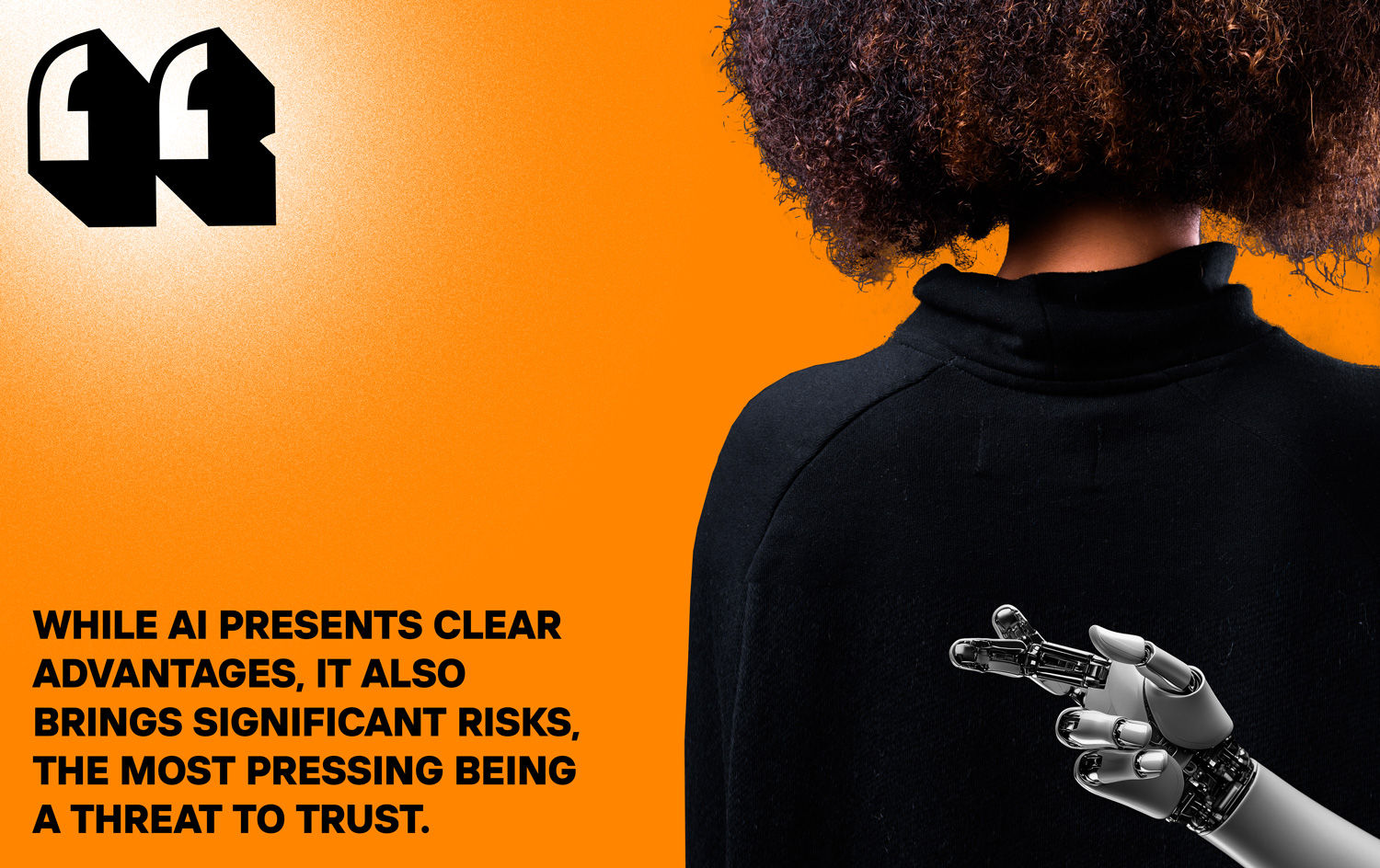
While AI presents clear advantages, it also brings significant risks, the most pressing being a threat to trust. Additional concerns such as privacy issues, market saturation, and potential job displacement must also be considered, as they could undermine the long-term effectiveness of influencer marketing.
Risks of AI in Influencer Marketing
Before exploring how AI can disrupt influencer marketing, it’s important to understand AI influencers—computer-generated digital personas that are designed to mimic human appearance, behavior, and emotional responses. Unlike their human counterparts, AI influencers are cost-effective, highly scalable, and capable of working 24 hours a day, seven days a week. Brands such as Prada, Calvin Klein, and Samsung have already begun partnering with AI influencers on TikTok and Instagram, like Miquela—a digital personality with millions of followers—to create content and engage with consumers in innovative ways. People follow Miquela because they are intrigued by her digital perfection combined with her rebelliousness that sets her apart from overly polished influencers.
Overall, AI influencers work by capturing the interest of tech-savvy audiences with their futuristic appeal and novel storytelling, all while being cost-effective, scalable, and engaging. While these partnerships demonstrate the potential of AI influencers, they also introduce significant risks, particularly to the following:
1. Loss of Authenticity and Emotional Connection
One good example of a recent AI fail involves KFC, which faced a backlash when it introduced a computer-generated version of Colonel Sanders. Although intended to modernize the brand, the campaign was criticized as inauthentic and gimmicky, lacking the emotional connection and relatability of a real person. It also highlighted a critical challenge of using AI influencers—they often can’t build the trust that consumers expect from brands.
2. Job Displacement of Human Influencers
AI influencers offer a cost-effective solution, but their rise could impact the careers of their human counterparts. As more brands turn to this technology, human influencers who have invested years into building their careers—and earning luxury perks like cars and homes in the process—could find themselves losing not only deals but also their jobs. This shift could spark a backlash against brands that use AI influencers, as consumers question the ethics of sidelining human creators who invest time, creativity, and credibility into their content.
3. Over-saturation
As more brands turn to AI influencers, the market risks becoming flooded with repetitive, cookie-cutter content. This makes it harder for brands to stand out and easier for consumers to disengage. When audiences perceive content as overly scripted and excessively sponsored, trust erodes, diminishing a campaign’s impact. For example, Miquela faced backlash for her frequent brand partnerships as she became a go-to for major companies like Calvin Klein, Samsung, and Prada. Instead of showcasing an authentic personality, her heavy rotation of sponsorships made her feel more like a corporate advertising tool than a genuine internet personality. This overexposure led to criticism that her content was too polished and lacked real engagement, highlighting concerns about influencer saturation and overcommercialization.
Striking the Right Balance: Leveraging AI While Mitigating Risks
As AI evolves, brands will face challenges in maintaining authentic influencer relationships. Coca-Cola, for instance, has been integrating AI tools to craft advertising content. However, when the brand produced an entire AI-generated ad recreating its classic 1995 “Holidays Are Coming” campaign to evoke nostalgia, the campaign sparked backlash. Critics argued that the ad lacked the warmth and emotional depth characteristic of Coca-Cola’s previous holiday campaigns, describing it as impersonal and a “dystopian nightmare.” The controversy emphasizes the need to find the right mix of innovation and genuineness—harnessing AI’s benefits while minimizing its risks and negative impacts.
Here are four recommended strategies designed to achieve this balance:
AI should enhance, not overshadow or replace, an influencer’s authentic voice. Tools like chatbots or AR filters can enrich audience engagement by offering personalized experiences while maintaining the influencer’s true brand identity. For example, Sephora collaborated with influencers to create virtual try-on experiences using AR filters. This approach allowed influencers to share their genuine thoughts and reactions to the products while providing followers with an interactive, personalized experience that felt both innovative and aligned with the influencer’s persona.
2. Align AI Usage With Your Brand’s Objectives and Values
When integrating AI into a marketing strategy, ensure that the type and usage align with the brand’s objectives and intended message. AI influencers work well for brands focused on building awareness, standing out in a crowded market, or targeting niche, tech-savvy consumers. For example, AI influencers have been used successfully to promote limited-edition product drops and virtual fashion shows or generate buzz around new digital products.
Designer brands have successfully used AI influencers to reinforce their exclusivity and unattainable image—essential elements of their luxury appeal. The unrelatable nature of AI aligns with the aspirational qualities of these brands, helping maintain their aura of mystery and exclusivity. For brands that prioritize emotional connections, community-building, or word-of-mouth marketing, however, AI influencers may not be as effective. Simply, they fail to generate the trust and relatability needed to cultivate lasting relationships with the target audience.
3. Maintain Transparency About AI’s Role
It’s important to be transparent with viewers about using AI in influencer marketing. Disclosing AI’s role in a campaign helps maintain trust and ensure that consumers are aware of its digital nature, avoiding any perception of deception. BMW, for example, openly introduced a virtual influencer and used the opportunity to represent its brand value of innovation. This transparent approach helped avoid backlash.
4. Use AI for Insights, Not Creativity
AI excels at providing data-driven insights into trends, audience preferences, and content performance, but it shouldn’t replace creativity. By handling time-consuming tasks like data analysis, trend spotting, or content distribution, AI frees influencers to focus on what they do best—creating innovative and authentic content. Using AI primarily to brainstorm topics or trends also allows influencers to maintain their voice and artistic freedom while devoting more energy to developing unique strategies that resonate with their followers.
The Path Forward
AI is here to stay, and brands that embrace it must strike a balance between innovation and authenticity. To succeed, companies need to reassess their core values and long-term vision to ensure that AI aligns with their goals without compromising what makes them unique. While AI offers numerous advantages, like scalability and efficiency, its potential risks—eroding trust or displacing human influencers—cannot be ignored.
The key lies in embracing AI’s capabilities to improve efficiency and scale while safeguarding the genuine relationships and creativity that define influencer marketing. By aligning AI with brand values, maintaining transparency, and using it to support rather than replace an influencer’s voice, brands can harness AI’s potential while preserving credibility. Those brands that manage this delicate push-and-pull will lead the way in fostering meaningful, lasting connections with their audiences.
