
Embarking on a technology project? Sometimes the most important part of the project doesn’t get the attention it needs, and that can make a huge difference in the success of the project. Below we go through the key elements to consider when thinking through how to align the business strategy to your technology project.
Key Components
At the top level, this can seem like a straightforward and obvious statement, but to truly align technology to your business strategy, approaching the process through the following components will ensure that a more robust solution is being implemented:
1. Strategy Alignment
Anchoring Business Drivers: In a months- and sometimes years-long technology project, it’s essential to ensure that the guiding principles that determined the strategic reasons for embarking on the project are anchored early, communicated, and understood across all stakeholders, vendors, and project members. As time moves forward, requirements change, people change, and technology changes, a clearly articulated “why we’re doing this” outline should become the leading document in every presentation, RFP, onboarding, and decision-making meeting.
2. Business Case Development
Roadmap and Benchmarking: A well-constructed business case provides a clear roadmap for implementation and serves as a benchmark for measuring the program’s success, ensuring alignment with the organization’s financial goals, strategic direction, and ultimate value proposition.
3. Operating Model (Op Model) Integration
Blueprint for Interaction: Ensuring that the value can be realized is highly dependent on the impact of new technology on the organization and how it operates. Developing an aligned Op Model will serve as a blueprint for how business processes, people, and technology interact within an organization. By integrating the Op Model within the technology enablement program, organizations ensure that technological advancements are harmoniously incorporated into the organizational fabric, roles and responsibilities are understood, and any new organizational changes are contemplated ahead of the investment.
Enhancing Efficiency and Agility: This integration facilitates transformation, aligns the value and efficiency metrics to the business in a more in-depth and practical way, and ensures that strategic objectives to enhance efficiency and agility are met.
4. Change Management Consideration
Planning for Impact: Without user adoption and acceptance, technology changes are doomed to fail or take too long to achieve their value proposition. Therefore, integrating change management from the outset is essential for navigating the human aspect of technology transformations. This involves planning for impacts on organizational culture, processes, and employees.
Strategies to Manage Resistance: Developing strategies to manage resistance ensures stakeholder engagement, effective communication, comprehensive training, and support, facilitating a smooth transition and promoting widespread adoption of new technologies.
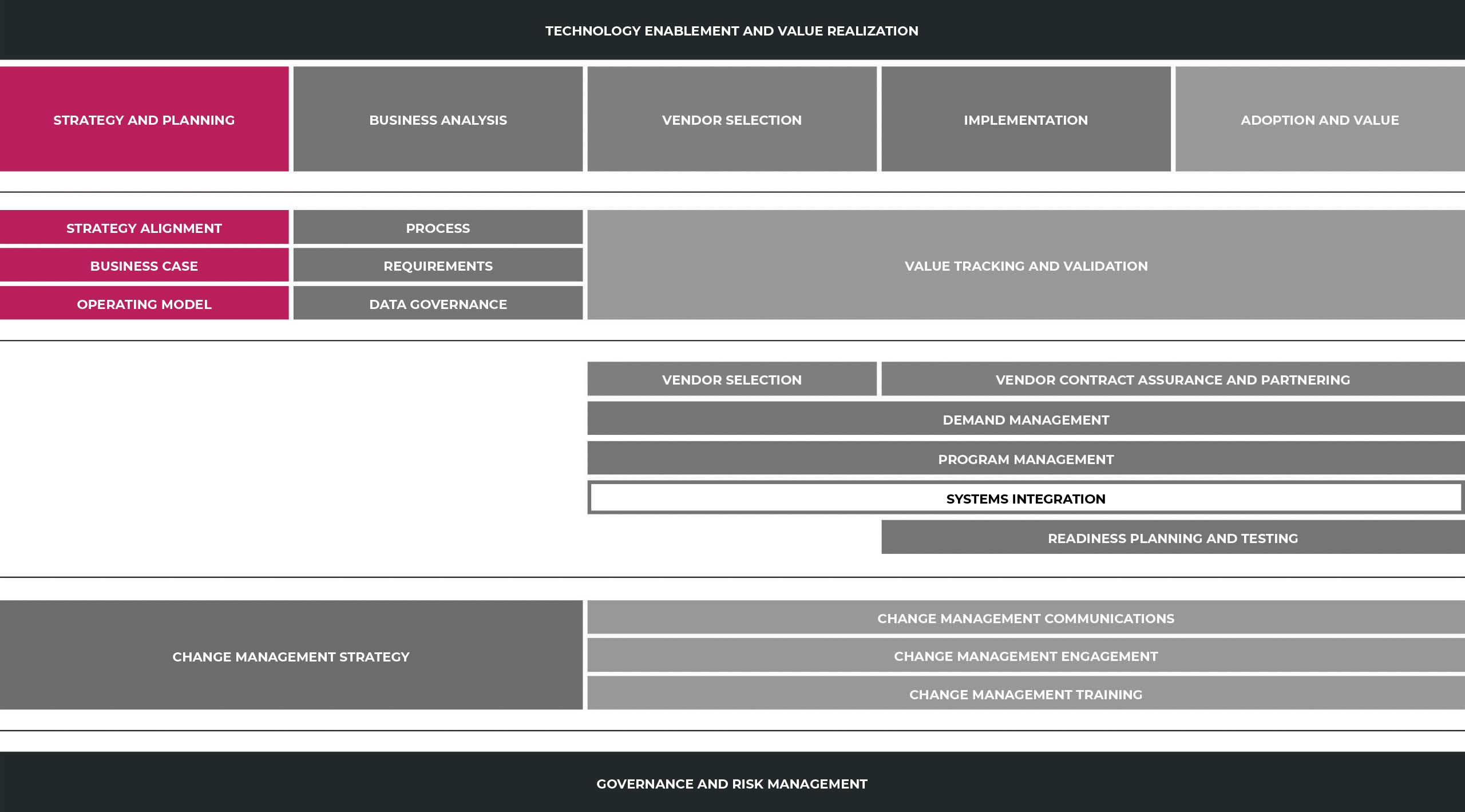
Jabian Consulting embodies a comprehensive and strategic approach to business strategy and planning within the technology enablement landscape. At its foundation, Jabian’s method emphasizes the critical alignment of technology investments with the unique challenges and overarching goals of an organization. By conducting an in-depth analysis of potential options and financial implications, Jabian counsels clients toward impactful investments that enhance their competitive edge, simplifying complex decision-making processes for maximum benefit. Clients can expect the following from every Business Strategy and Planning engagement with Jabian:
1. Holistic Alignment
Ensuring that technology investments directly support specific business challenges and strategic objectives, thereby fostering coherence and strategic alignment across the organization.
2. Operational Excellence
Crafting Operating Models that align with client goals and are supported by robust change management strategies to ensure sustainable transformations.
3. Stakeholder Engagement
Employing comprehensive change management communications strategies to keep all stakeholders informed and engaged throughout the technological transformation.
4. Integrated Strategy
Combining elements of strategy, process improvement, technology, human capital, and change management to comprehensively support the organization’s vision and success metrics.
Value Realization
Successful realization of value in technology enablement hinges on three key strategies: Business Alignment, User Adoption, and Delivery Excellence. Together, these strategies ensure that technology investments align with strategic goals, are executed flawlessly, and are fully adopted, driving measurable benefits and strengthening competitive advantage.
1. Business Alignment
Ensures that technology initiatives are aligned with the organization’s overarching goals through strategic planning, driving value, and supporting desired business outcomes.
2. User Adoption
Ensures full integration and utilization of new systems by fostering a skilled, motivated, and confident workforce, thereby maximizing the return on technology investments.
3. Delivery Excellence
Ensures that technology projects are executed with precision and quality, aligning initiatives with strategic goals to enhance operational efficiency and competitive edge.
So Why Do All This?
Neglecting business planning and strategy during a technology enablement process exposes an organization to significant risks that can fundamentally impact its capacity to achieve desired outcomes and sustain competitive advantage. Here are the top six issues we see that result from strategic planning not being contemplated effectively.
1. Strategic Misalignment
Technology investments may not support or may even contradict the organization’s strategic objectives, leading to wasted resources and opportunities.
2. Resource Inefficiency
Misallocating resources, including time, budget, and personnel, to projects that do not offer optimal returns can strain financial resources and divert attention from high-impact initiatives.
3. Missed Market Opportunities
A lack of strategic foresight can result in missed opportunities to capitalize on emerging technologies, market shifts, or competitive advantages, hindering growth and eroding market position.
4. Increased Operational Risks
Operational inefficiencies and vulnerabilities may arise, impacting productivity, customer satisfaction, and profitability.
5. Resistance and Adoption Challenges
Without clear strategic direction, stakeholders may resist new technologies and processes, impeding adoption and undermining the success of technology projects.
6. Inability to Scale
Ensuring that technology initiatives are scalable and adaptable is essential. Without strategic planning, organizations may end up with rigid systems that cannot evolve with the business, limiting growth and agility.
Conclusion
In the digital age, successful technology enablement is contingent on meticulous strategy and planning. By integrating comprehensive business strategies with technology initiatives, organizations can ensure that technology investments drive meaningful change, deliver value, and sustain competitive advantage. Jabian Consulting’s strategic approach to business strategy and planning exemplifies how organizations can navigate the complexities of technology enablement, ensuring alignment with business objectives and fostering long-term success.
